
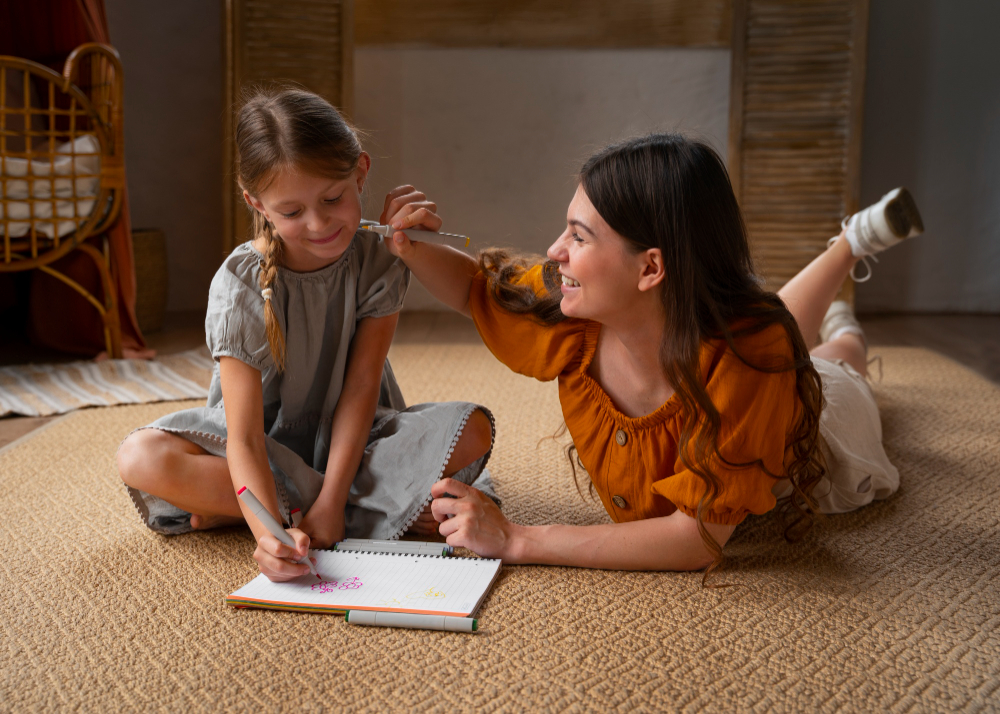
Life doesn’t always go smoothly, for children or adults.
At Scoil Sinéad, we teach that resilience isn’t about avoiding challenges; it’s about learning how to recover, adapt, and try again.
At home, two of the most powerful ways parents can nurture resilience are through routine and praise, simple daily tools that help children feel secure and capable.
Here are five ways to use structure and encouragement to build lasting inner strength.
-
Keep Routines Predictable but Flexible
Children feel safer when life follows a familiar rhythm.
Knowing what comes next gives them a sense of control and reduces anxiety.
Create consistent patterns for mornings, mealtimes, and bedtimes.
At the same time, teach flexibility by showing that sometimes plans change and that’s okay.
Say, “We usually do this, but today we’ll try it another way.”
Predictability creates calm; flexibility builds resilience. -
Celebrate Effort More Than Achievement
When you praise effort instead of outcome, you help your child develop a “growth mindset.”
This means they learn to see challenges as opportunities rather than threats.
Instead of “You’re so smart,” try “You worked really hard on that.”
It teaches them that success comes from persistence, not perfection. -
Model Calm When Things Go Wrong
Children watch how we handle stress more than they hear what we say.
If we stay calm and problem-solve out loud “That didn’t go as planned, but let’s figure it out” they learn emotional regulation by example.
You don’t have to be perfect; just being steady helps them learn that problems can be solved without panic. -
Teach Them to Recover from Mistakes
Mistakes are how we learn, but only if children feel safe to make them.
When something goes wrong, focus on what they can do next, not what went wrong.
Say, “What could we try next time?” or “I love how you’re thinking about fixing it.”
This approach turns disappointment into learning, and builds confidence to keep trying. -
Use Praise to Build Identity, Not Dependence
Praise should empower, not control.
Aim for feedback that helps children see their own strengths: “You showed kindness,” “You didn’t give up,” “You helped someone today.”
This type of recognition connects achievement to character, teaching children who they are, not just what they do.
“Routine gives children roots; praise gives them wings.”
Try This at Home
Pick one part of your child’s day, bedtime, homework, or getting ready in the morning, and make it predictable for one week.
Use calm encouragement and notice their effort.
By the end of the week, talk together about how it felt.
You’ll often see fewer meltdowns, more cooperation, and a stronger sense of self-worth.
At Scoil Sinéad, we believe resilience is built in the small moments, through structure, encouragement, and connection.
Every time a child learns to calm themselves, adapt, or try again, their confidence grows stronger than before.